
Executing the Energy Transition: Bridging the Infrastructure Gap and Securing the Next 25 Years
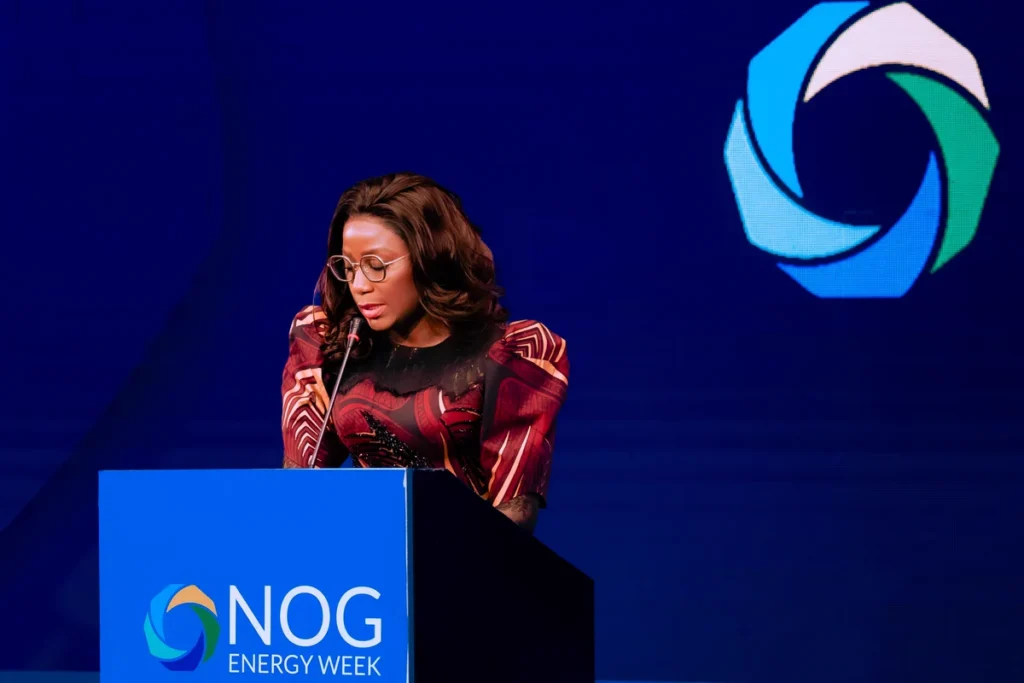
Executive Speech Excerpts from SA to the President on Energy Mrs Olu Verhenjen at NOG 2026 | Women in Energy Network
The Infrastructure Financing Gap and Strategic Direction
Africa faces a significant infrastructure financing gap estimated at approximately US$38 billion, underscoring the need for stronger institutional credibility, disciplined execution, and sustainable project financing. Closing this gap requires robust governance, investor confidence, and the financial capacity to deliver strategic projects successfully.
Our strategic direction is clear: transforming our natural gas resources into electricity generation converting molecules into megawatts to drive an energy transition that is both practical and transformational.
Structural Reforms and Value Chain Discipline
We have implemented long-awaited structural reforms that had remained under discussion for years. Through targeted policy incentives and streamlined contracting processes, we have reduced project execution timelines by more than half, improving efficiency and accelerating investment decisions.
Production growth remains a national priority, with a target of 3 million barrels of oil per day (bopd). At the same time, improving margins, strengthening external reserves, and advancing a ₦4 trillion credibility programme are reinforcing macroeconomic stability and investor confidence.
The introduction of a payment assurance framework has strengthened financial discipline across the power value chain, ensuring timely payments from generation companies to gas suppliers. This enables producers to invest with greater confidence while improving the reliability of electricity supply.
Market Stability, Workforce, and the Regulatory Environment
Nigeria’s LNG exports continue to grow, strengthening the country’s position in the global energy market. While economic reforms have imposed short-term pressures on households, measures are being implemented to mitigate these impacts. In response to recent increases in LPG prices, the African Centre of Excellence (ACE) is working to establish sustainable pricing benchmarks that balance affordability with market viability. Additionally, LPG import duty concessions valued at approximately US$93 million have been introduced to support market stability and consumer access.
Africa’s long-term competitiveness will depend on developing a highly skilled workforce capable of supporting industrialization and energy transformation. Landmark projects such as the Dangote Refinery demonstrate the continent’s capacity to execute world-class infrastructure while strengthening domestic ownership and value creation.
Regulators have a critical responsibility to create an enabling environment that supports—not constrains—investment. Effective reforms must realign incentives, encourage private sector participation, and foster long-term capital inflows. While meaningful reforms inevitably encounter resistance, sustained progress requires unwavering commitment.
Outcomes, Accountability, and the Next 25 Years
National development must continue to be anchored on transparency, discipline, accountability, and the protection of national sovereignty. Although substantial progress has been achieved, significant work remains to address inflation, insecurity, access to finance, and broader structural challenges.
Ultimately, the true measure of success is not the reforms themselves, but their outcomes. We must ask whether improvements in the power sector are attracting investment, creating employment, restoring confidence in the economy, and positioning Nigeria to realize its ambition of becoming a global energy leader.
The next twenty-five years will be defined not by our aspirations, but by our ability to execute. We must continue deploying capital, infrastructure, technology, and human capability to build a resilient, competitive, and inclusive energy sector that delivers sustainable prosperity for future generations.
Leave a comment: